The Best Private Cloud Platforms in 2026
Compare VMware Cloud Foundation, Nutanix, OpenStack, and Azure Local.


A private cloud platform lets teams create virtual machines, storage, and networks on infrastructure dedicated to their organization. Application teams request those resources through APIs or a self-service interface, with the infrastructure team managing the environment behind it.
Organizations use private clouds to keep workloads close to their users or data, support applications with specific hardware needs, or meet requirements for how infrastructure is operated. The environment can run in the organization's own data center or be hosted by a provider.
We'll also look at how Encore lets teams deploy backends through a managed platform in their own AWS or GCP account. It handles application infrastructure and deployments using public cloud services, with the account and resources under your organization's control.
Private cloud platforms compared
VMware Cloud Foundation
VMware Cloud Foundation packages VMware's infrastructure software into a private cloud platform. It includes vSphere for virtualization, vSAN for storage, and NSX for networking, along with management and automation tools. Teams can run virtual machines and Kubernetes workloads on the platform.
For an organization already using VMware, this builds on tools its infrastructure team knows. Existing workloads can remain in the VMware environment as the team adds more automation and self-service. The amount of preparation depends on the versions and hardware already in use.
Operating the platform includes maintaining its components and planning updates across the environment. The software subscription sits alongside hardware, support, and staffing costs. A move from an existing vSphere installation therefore involves both the platform configuration and the ongoing subscription arrangement.
Nutanix Cloud Platform
Nutanix Cloud Platform combines compute and storage in a cluster managed through Nutanix software. This is commonly called hyperconverged infrastructure: storage and computing capacity are managed together rather than through separate systems. AHV provides virtualization, and the wider platform includes data services and support for Kubernetes workloads.
Infrastructure teams use Nutanix management tools to work with the cluster and its virtual machines. Adding capacity and maintaining the environment become part of that common management workflow. Hardware must be supported by the selected Nutanix configuration.
OpenStack
OpenStack is a collection of open source services for building a cloud. Nova manages compute, Neutron handles networking, Cinder provides block storage, and Keystone handles identity. Together, these services let teams provision infrastructure through APIs and projects.
An organization can choose the components and infrastructure that support its workloads. That flexibility is part of OpenStack's appeal for service providers, research organizations, and enterprises building their own cloud services. The components also need to be deployed, configured, and maintained together.
Some organizations operate OpenStack directly. Others use a distribution or managed provider to handle installation and more of the ongoing maintenance. The software is open source, while the hardware, engineering time, and any commercial support contribute to the cost of running it.
Azure Local
Azure Local brings Azure management capabilities to supported infrastructure at customer-controlled locations. Organizations can use it to run workloads in their data centers or edge sites while managing them through Microsoft tools.
Azure Local also offers disconnected operations for sites without internet access. Hardware support and management features depend on which deployment model you choose.
What does running a private cloud involve?
The infrastructure team provides capacity for applications and keeps the platform working as hardware and software change. It installs updates, replaces failed equipment, and manages the systems used for backup and recovery. A hosted or managed private cloud provider can take on some of that work.
Application teams then use the resources the platform exposes. They may create virtual machines through a portal, request storage, or deploy workloads through an API. The infrastructure team maintains the configurations and access rules behind those requests.
Moving an existing application into that environment involves its dependencies too. Its network connections, storage, and backup process need to work on the destination platform. When a move changes the hypervisor or storage system, conversion and testing become part of the migration.
What affects the cost?
Private cloud costs include the platform software and the hardware it runs on. Equipment needs support and eventual replacement, and a data center adds facilities and power costs. Backup storage and capacity at a recovery site can add to the total.
Software packaging varies by vendor and offering. A commercial platform can combine several components under a subscription, while an OpenStack deployment may involve a distribution or support contract. In both cases, the team or provider operating it needs time for maintenance and upgrades.
Existing infrastructure affects the migration budget. Keeping compatible hardware and familiar tooling can reduce the initial work. Moving to another platform introduces conversion and training costs alongside the changes in ongoing subscriptions and support.
Running in your own cloud account with Encore
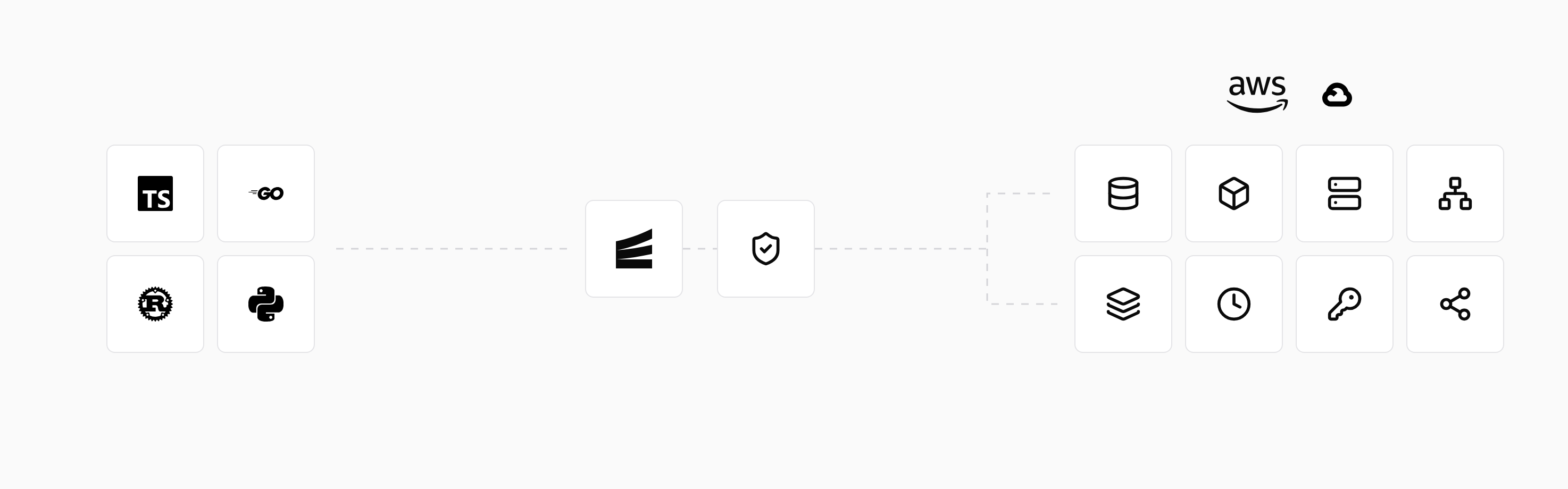
Some teams want their applications and data in a cloud account they control, with infrastructure management handled by a platform. Encore supports that approach for backend applications in AWS or GCP. You declare the services and resources the application needs in code, and the platform provisions and connects the cloud infrastructure as part of deployment.
A declared SQL database becomes managed Postgres in RDS or Cloud SQL. Services that use it receive the connection configuration and permissions they need. Your team can deploy application changes through a managed workflow while owning the account where the resources run.
The development workflow also runs local versions of declared resources with encore run. Developers can test locally and use the managed platform for deployments and observability in the cloud.
Run in your terminal to get started locally.
Related guides
Frequently asked questions
Is Kubernetes a private cloud?
Kubernetes manages container workloads. It can run within a private cloud, while other components provide virtual machines, storage, networking, and access management for the wider environment.
Deploy to your cloud on AWS and Google Cloud
without managing infrastructure
Encore lets developers and agents define application infrastructure directly in code, then automatically provisions it from local development to production in your AWS or GCP account.
