Jenkins Alternatives in 2026: CI/CD Without Maintaining a Build Server
Jenkins can automate almost anything, at the cost of running a controller, agents and plugins yourself. The alternatives trade some of that flexibility for less upkeep.


Jenkins has been the default self-hosted automation server for well over a decade, with Jenkinsfile pipelines and a large plugin ecosystem that can build and deploy almost anything. The cost is operational: someone runs the controller and its agents, keeps Java and plugins upgraded, and secures a server that holds deploy credentials.
Teams look at alternatives to cut that upkeep, either by moving to a hosted CI service or by handing the deploy pipeline to a platform, and this guide covers both routes.
Jenkins alternatives at a glance
Each option is covered below, starting with Encore.
Building, testing and deploying on git push with Encore

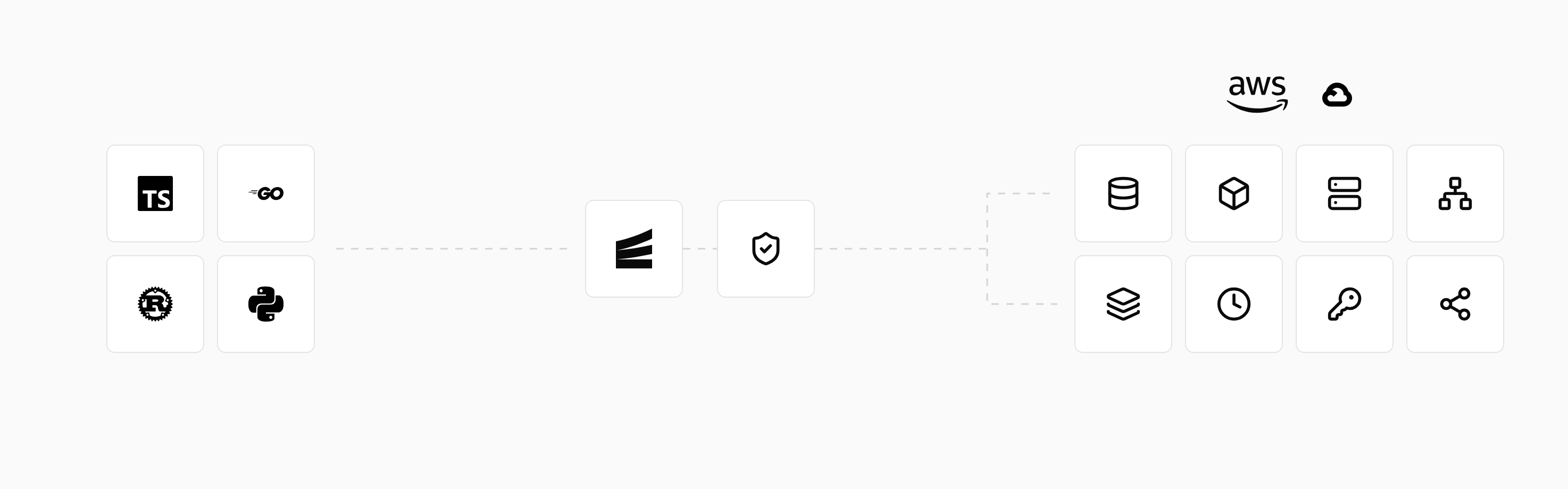
Encore is infrastructure from code for TypeScript and Go, with a platform that provisions and deploys into your own AWS or GCP account. Pushing to the connected branch starts a build and test phase, an infrastructure provisioning phase and a deployment phase, so the Jenkinsfile stages for building images, running Terraform and rolling out services are replaced by the platform.
Tests are ordinary Go or TypeScript tests, like this one, which calls an endpoint that writes to Postgres, and encore test runs it against a test database with the migrations applied:
// links/links_test.go
package links

import (
	"context"
	"testing"
)

// encore test starts a test database with the migrations applied.
func TestShorten(t *testing.T) {
	link, err := Shorten(context.Background(), &ShortenParams{URL: "https://example.com"})
	if err != nil {
		t.Fatal(err)
	}
	if link.ID == 0 || link.URL != "https://example.com" {
		t.Fatalf("unexpected link: %+v", link)
	}
}
Custom steps that a Jenkins stage used to run, such as generating code or bundling assets, go in build hooks in encore.app:
{
  "id": "my-app",
  "lang": "go",
  "build": {
    "hooks": {
      "prebuild": "go generate ./...",
      "postbuild": ""
    }
  }
}
Run in your terminal to get started locally.
With the GitHub integration, pushes to the configured branch deploy automatically. The testing docs cover mocking and service-to-service tests. Teams that keep Jenkins can still use Encore locally and build a Docker image with encore build docker as a Jenkins stage.
Deploy credentials for AWS or GCP stay with the platform rather than in a CI server, and Encore provisions an IAM role for the service when it deploys.
Best fit: teams whose pipeline exists mainly to build, test and deploy backend services to AWS or GCP.
GitHub Actions
 GitHub Actions
 runs workflows defined in YAML in the repository, triggered by pushes, pull requests, schedules and other events. Jobs run on GitHub-hosted runners for Linux, Windows and macOS or on self-hosted runners, and the marketplace covers most of what Jenkins plugins do.
Deployment logic is still yours to write, including cloud credentials, which GitHub recommends supplying through OIDC rather than long-lived secrets.
Best fit: teams whose code is already on GitHub and who want CI next to pull requests.
GitLab CI/CD
 GitLab
 CI/CD defines pipelines in .gitlab-ci.yml with stages, jobs, environments and approvals, and runs them on GitLab-hosted runners or runners you manage. It is part of the same product as the repository, issues and container registry, and GitLab itself can be self-managed.
Best fit: teams on GitLab, including those that self-manage it for compliance.
CircleCI
 CircleCI
 is a dedicated hosted CI service configured with .circleci/config.yml, with orbs as reusable packages of jobs and commands, test splitting across parallel containers and self-hosted runners for private networks. It works with GitHub, GitLab and Bitbucket repositories.
Best fit: teams that want CI as a separate service with strong parallelism and caching.
Buildkite
 Buildkite
 splits CI into a hosted control plane and the Buildkite agent, which runs builds on your own machines or on Buildkite's hosted infrastructure. Pipelines are defined in YAML and can be generated dynamically at build time, which suits large monorepos.
It is the closest replacement for Jenkins agents on your own hardware without running the controller.
Best fit: teams with large or specialized builds that must run on their own infrastructure.
How to choose
Choose GitHub Actions or GitLab CI/CD to keep CI next to the repository, CircleCI for a dedicated hosted service, and Buildkite to keep builds on your own machines without a Jenkins controller. Choose Encore when the pipeline exists to build, test and deploy backend services to your own AWS or GCP account.
Related guides
Frequently asked questions
What is the best alternative to Jenkins?
GitHub Actions for code on GitHub, GitLab CI/CD for code on GitLab, CircleCI for a dedicated hosted CI service, and Buildkite for a hosted control plane with build agents on your own machines.
Is Jenkins still used in 2026?
Jenkins is actively maintained, with weekly and long-term support releases, and remains common where builds must run on internal infrastructure. Teams move away from it mainly to stop maintaining the controller, agents and plugin upgrades.
How do I migrate a Jenkinsfile to GitHub Actions?
Map each stage to a job or step in a workflow YAML file, replace plugins with marketplace actions, and move credentials into repository or environment secrets. GitHub provides an importer that converts Jenkins pipelines into workflow drafts you then review.
How do I run Go tests against a real database in CI?
With Encore, write a normal Go test that calls your endpoint function, such as Shorten(ctx, params), and run encore test. It sets up a test database with your migrations applied, and the same tests run in Encore's build and test phase on every push.
Deploy to your cloud on AWS and Google Cloud
without managing infrastructure
Encore lets developers and agents define application infrastructure directly in code, then automatically provisions it from local development to production in your AWS or GCP account.
