Fastify vs Encore.ts in 2026
Comparing schema-validated vs infrastructure-aware TypeScript frameworks

Fastify is a Node.js framework built around schema-based validation and a plugin architecture, designed for developers who want explicit control over their HTTP layer. Encore.ts takes a different approach, focusing on distributed systems with automatic infrastructure provisioning while also delivering high performance through its Rust-based runtime.
Both frameworks support TypeScript and prioritize developer experience. The choice depends on whether you need maximum control over your HTTP layer or want integrated infrastructure automation.
Quick Comparison
The Basics: Defining an API
Let's start with a simple REST endpoint.
Fastify
import Fastify from 'fastify';

const fastify = Fastify({ logger: true });

fastify.get('/hello/:name', async (request, reply) => {
  const { name } = request.params as { name: string };
  return { message: `Hello, ${name}!` };
});

fastify.listen({ port: 3000 });
Fastify is explicit about server setup. You create the instance, define routes, and start the server. The framework stays out of your way while providing excellent defaults.
Encore.ts
hello/hello.tsimport { api } from "encore.dev/api";

interface HelloResponse {
  message: string;
}

export const hello = api(
  { method: "GET", path: "/hello/:name", expose: true },
  async ({ name }: { name: string }): Promise<HelloResponse> => {
    return { message: `Hello, ${name}!` };
  }
);
Encore uses a declarative approach. You define the endpoint with its types, and Encore handles server setup, routing, and request validation.
Verdict: Encore is more concise and handles server setup, routing, and validation automatically.
Type Safety and Validation
Both frameworks take validation seriously, but with different approaches.
Fastify
Fastify uses JSON Schema for validation, with TypeBox providing TypeScript integration:
import Fastify from 'fastify';
import { Type, Static } from '@sinclair/typebox';

const fastify = Fastify();

const CreateUserSchema = Type.Object({
  email: Type.String({ format: 'email' }),
  name: Type.String({ minLength: 1 }),
});

type CreateUserBody = Static<typeof CreateUserSchema>;

const CreateUserResponseSchema = Type.Object({
  id: Type.Number(),
  email: Type.String(),
  name: Type.String(),
});

fastify.post<{ Body: CreateUserBody }>(
  '/users',
  {
    schema: {
      body: CreateUserSchema,
      response: { 200: CreateUserResponseSchema },
    },
  },
  async (request, reply) => {
    const { email, name } = request.body;
    return { id: 1, email, name };
  }
);
Fastify compiles JSON schemas to validation functions at startup. TypeBox bridges the gap between JSON Schema and TypeScript types, but you're maintaining two representations.
Encore.ts
users/users.tsimport { api } from "encore.dev/api";

interface CreateUserRequest {
  email: string;
  name: string;
}

interface User {
  id: number;
  email: string;
  name: string;
}

export const createUser = api(
  { method: "POST", path: "/users", expose: true },
  async (req: CreateUserRequest): Promise<User> => {
    return { id: 1, email: req.email, name: req.name };
  }
);
Encore validates requests based on TypeScript types directly. No separate schema definition. For additional constraints, use built-in validation rules:
service.tsimport { MinLen, IsEmail } from "encore.dev/validate";

interface CreateUserRequest {
  email: string & IsEmail;
  name: string & MinLen<1>;
}
Verdict: Encore's approach is more concise—types serve as the single source of truth. Fastify requires maintaining separate JSON schemas alongside TypeScript types.
Performance
Fastify was historically positioned as one of the fastest Node.js frameworks. However, recent benchmarks show this advantage has diminished as Node.js performance has improved overall.
Fastify
Fastify's architecture includes:
- Optimized HTTP parsing and routing
- Schema compilation for validation
- Efficient JSON serialization with
fast-json-stringify
// Fastify compiles schemas for serialization
fastify.get('/users/:id', {
  schema: {
    response: {
      200: {
        type: 'object',
        properties: {
          id: { type: 'number' },
          name: { type: 'string' },
        },
      },
    },
  },
  handler: async (request, reply) => {
    return { id: 1, name: 'John' };
  },
});
Encore.ts
Encore.ts takes a different approach with a Rust-based runtime that handles HTTP parsing, routing, and validation outside the Node.js event loop:
users/users.tsexport const getUser = api(
  { method: "GET", path: "/users/:id", expose: true },
  async ({ id }: { id: number }): Promise<User> => {
    // The Rust runtime handles HTTP, routing, and validation
    // Your TypeScript code focuses on business logic
    return { id, name: "John" };
  }
);
This architecture offloads performance-critical work to compiled code while keeping your application logic in TypeScript. In benchmarks, Encore.ts significantly outperforms both Fastify and Express in request throughput.
Requests/sec
Verdict: Performance is no longer Fastify's primary differentiator. If raw throughput matters, Encore's Rust-based runtime has a clear advantage. For most applications, choose based on other factors like infrastructure needs and developer experience.
Plugin System vs Infrastructure Primitives
Fastify
Fastify has an extensive plugin ecosystem:
import Fastify from 'fastify';
import fastifyPostgres from '@fastify/postgres';
import fastifyRedis from '@fastify/redis';
import fastifyRateLimit from '@fastify/rate-limit';

const fastify = Fastify();

// Register plugins
await fastify.register(fastifyPostgres, {
  connectionString: process.env.DATABASE_URL,
});

await fastify.register(fastifyRedis, {
  host: process.env.REDIS_HOST,
});

await fastify.register(fastifyRateLimit, {
  max: 100,
  timeWindow: '1 minute',
});

fastify.get('/users/:id', async (request, reply) => {
  const { rows } = await fastify.pg.query(
    'SELECT * FROM users WHERE id = $1',
    [request.params.id]
  );
  return rows[0];
});
Plugins integrate with Fastify's lifecycle and encapsulation system. You configure connections, manage credentials, and handle local development setup yourself.
Encore.ts
Encore provides infrastructure as code primitives:
import { api } from "encore.dev/api";
import { SQLDatabase } from "encore.dev/storage/sqldb";
import { CronJob } from "encore.dev/cron";
import { Topic, Subscription } from "encore.dev/pubsub";

const db = new SQLDatabase("users", { migrations: "./migrations" });

const userCreated = new Topic<{ userId: string }>("user-created", {
  deliveryGuarantee: "at-least-once",
});

const _ = new CronJob("cleanup", {
  title: "Clean up old records",
  every: "24h",
  endpoint: cleanupOldRecords,
});

export const getUser = api(
  { method: "GET", path: "/users/:id", expose: true },
  async ({ id }: { id: string }) => {
    return await db.queryRow`SELECT * FROM users WHERE id = ${id}`;
  }
);
Databases, Pub/Sub, and cron jobs are provisioned automatically in local development. No Docker setup, no connection strings, no environment variables.
Verdict: Encore provides integrated infrastructure with automatic provisioning. Fastify requires manual setup for databases, connection strings, and local development.
Local Development
Fastify
Local development with Fastify typically requires:
# Start PostgreSQL
docker run -d -p 5432:5432 -e POSTGRES_PASSWORD=secret postgres

# Set environment variables
export DATABASE_URL=postgres://postgres:secret@localhost:5432/myapp

# Run migrations
npm run migrate

# Start the server
npm run dev
You manage your own database instances, connection strings, and supporting services.
Encore.ts
encore run
Encore provisions local PostgreSQL databases, runs migrations, and starts your services. The local development dashboard at localhost:9400 provides API testing, database inspection, and request tracing.
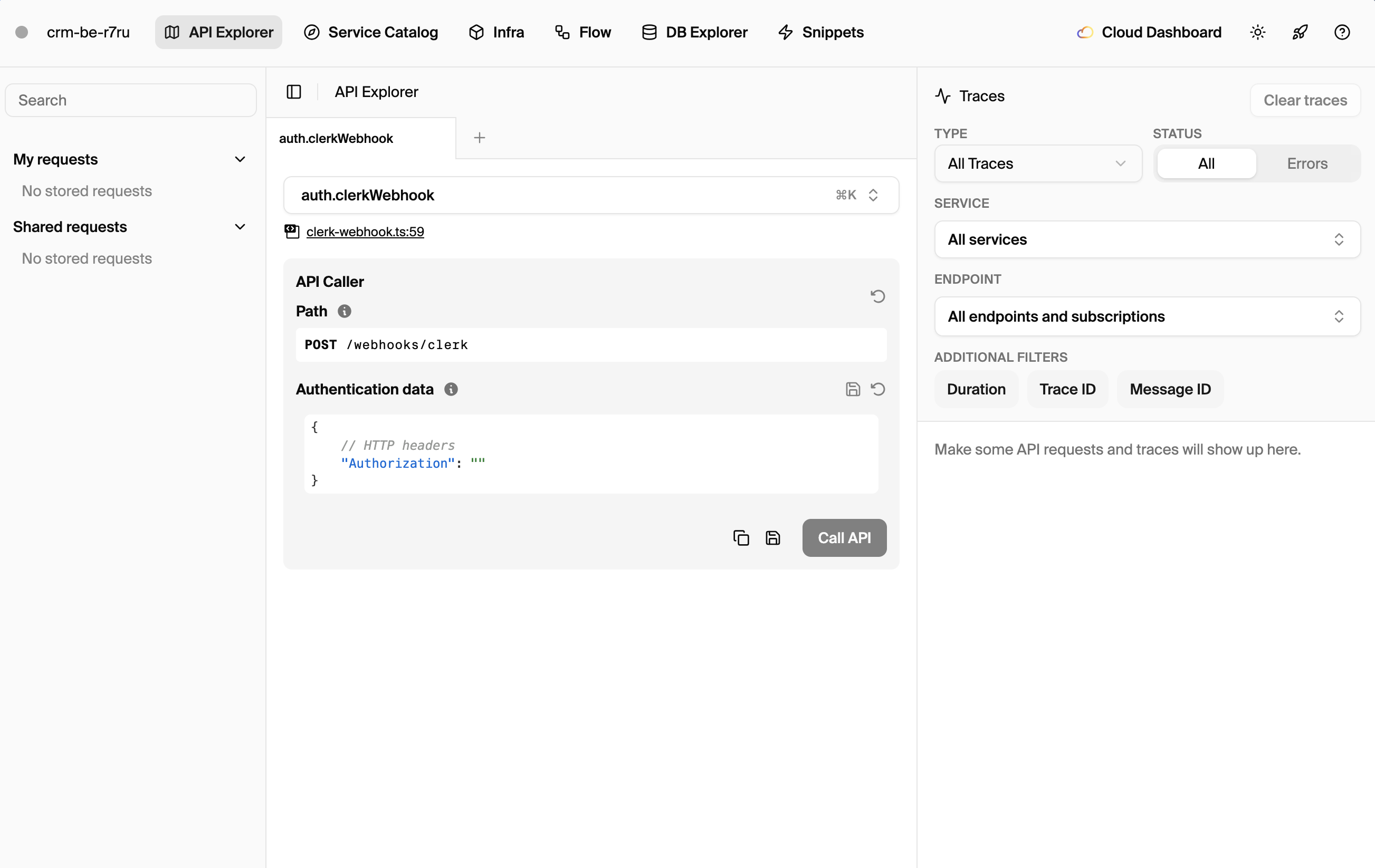
Verdict: Encore automates local infrastructure, which speeds up development significantly. Fastify requires manual database setup with Docker and environment variables.
Observability
Fastify
Fastify supports observability through plugins and manual instrumentation:
import Fastify from 'fastify';
import { trace } from '@opentelemetry/api';

const fastify = Fastify({ logger: true });

// Manual tracing
fastify.addHook('onRequest', async (request) => {
  const tracer = trace.getTracer('my-service');
  request.span = tracer.startSpan(`${request.method} ${request.url}`);
});

fastify.addHook('onResponse', async (request) => {
  request.span?.end();
});
You configure logging, tracing exporters, and metrics collection. Fastify's built-in logger is excellent, but distributed tracing requires setup.
Encore.ts
users/users.tsimport { api } from "encore.dev/api";
import log from "encore.dev/log";

export const getUser = api(
  { method: "GET", path: "/users/:id", expose: true },
  async ({ id }: { id: string }) => {
    log.info("fetching user", { userId: id });
    // All database queries and service calls are traced automatically
    return { id, name: "John" };
  }
);
Every request is traced end-to-end. Database queries, service calls, and Pub/Sub messages appear in traces automatically.
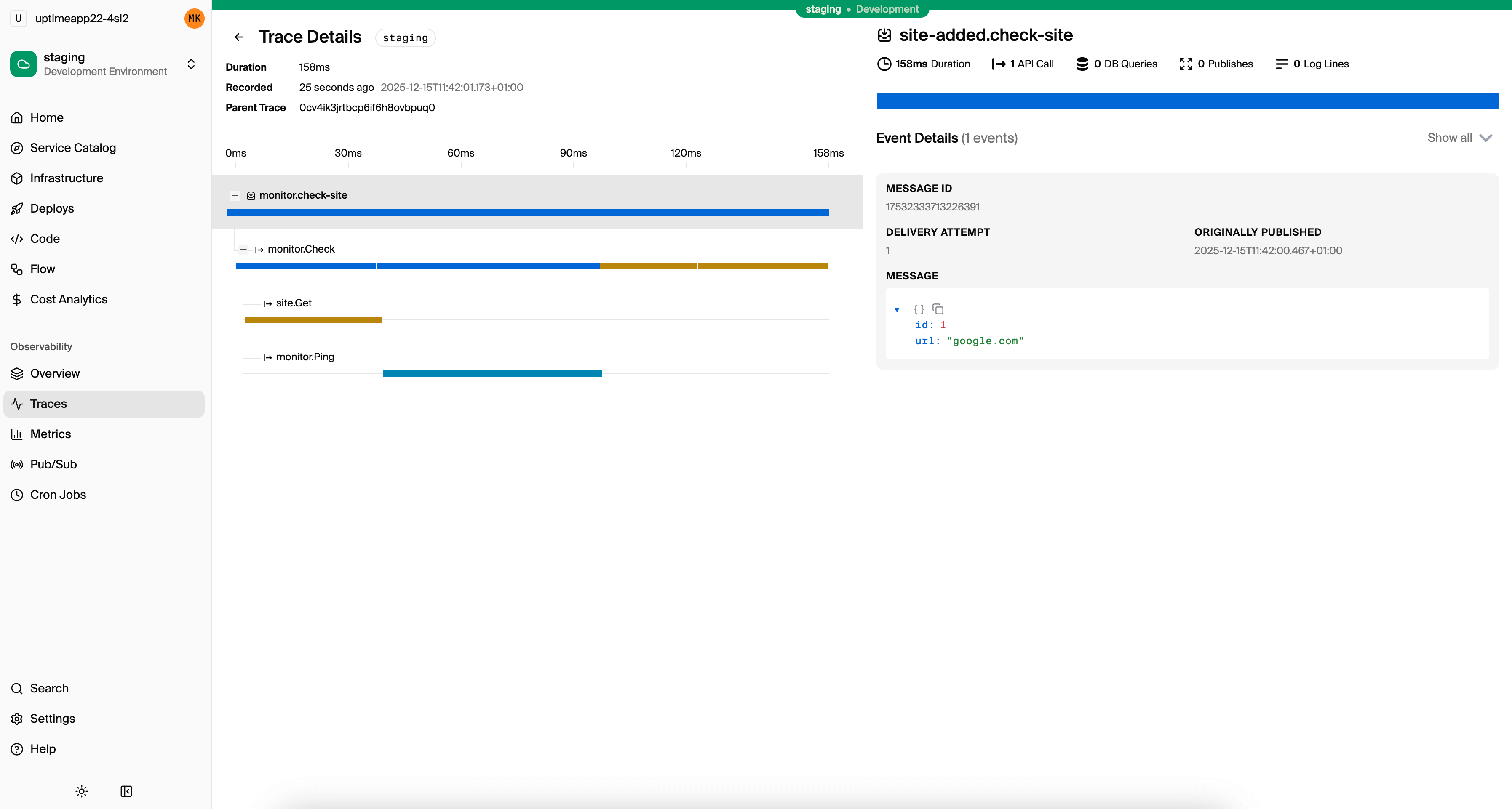
Verdict: Encore provides built-in observability without configuration. Fastify requires manual setup with OpenTelemetry and external services.
Microservices
Fastify
Building microservices with Fastify means handling service communication yourself:
// users-service
const fastify = Fastify();

fastify.get('/users/:id', async (request) => {
  return { id: request.params.id, name: 'John' };
});

fastify.listen({ port: 3001 });

// orders-service
const fastify = Fastify();

fastify.post('/orders', async (request) => {
  // Manual service call
  const response = await fetch(
    `${process.env.USERS_SERVICE_URL}/users/${request.body.userId}`
  );
  const user = await response.json();
  return { orderId: 1, user };
});

fastify.listen({ port: 3002 });
You manage URLs, handle network errors, implement retries, and correlate traces manually.
Encore.ts
users/users.ts// users/api.ts
export const getUser = api(
  { method: "GET", path: "/users/:id", expose: true },
  async ({ id }: { id: string }) => {
    return { id, name: "John" };
  }
);

// orders/api.ts
import { users } from "~encore/clients";

export const createOrder = api(
  { method: "POST", path: "/orders", expose: true },
  async (req: CreateOrderRequest) => {
    // Type-safe call, automatic service discovery
    const user = await users.getUser({ id: req.userId });
    return { orderId: 1, user };
  }
);
Service calls look like function calls. Encore handles service discovery and correlates traces automatically. The service catalog shows how services communicate.
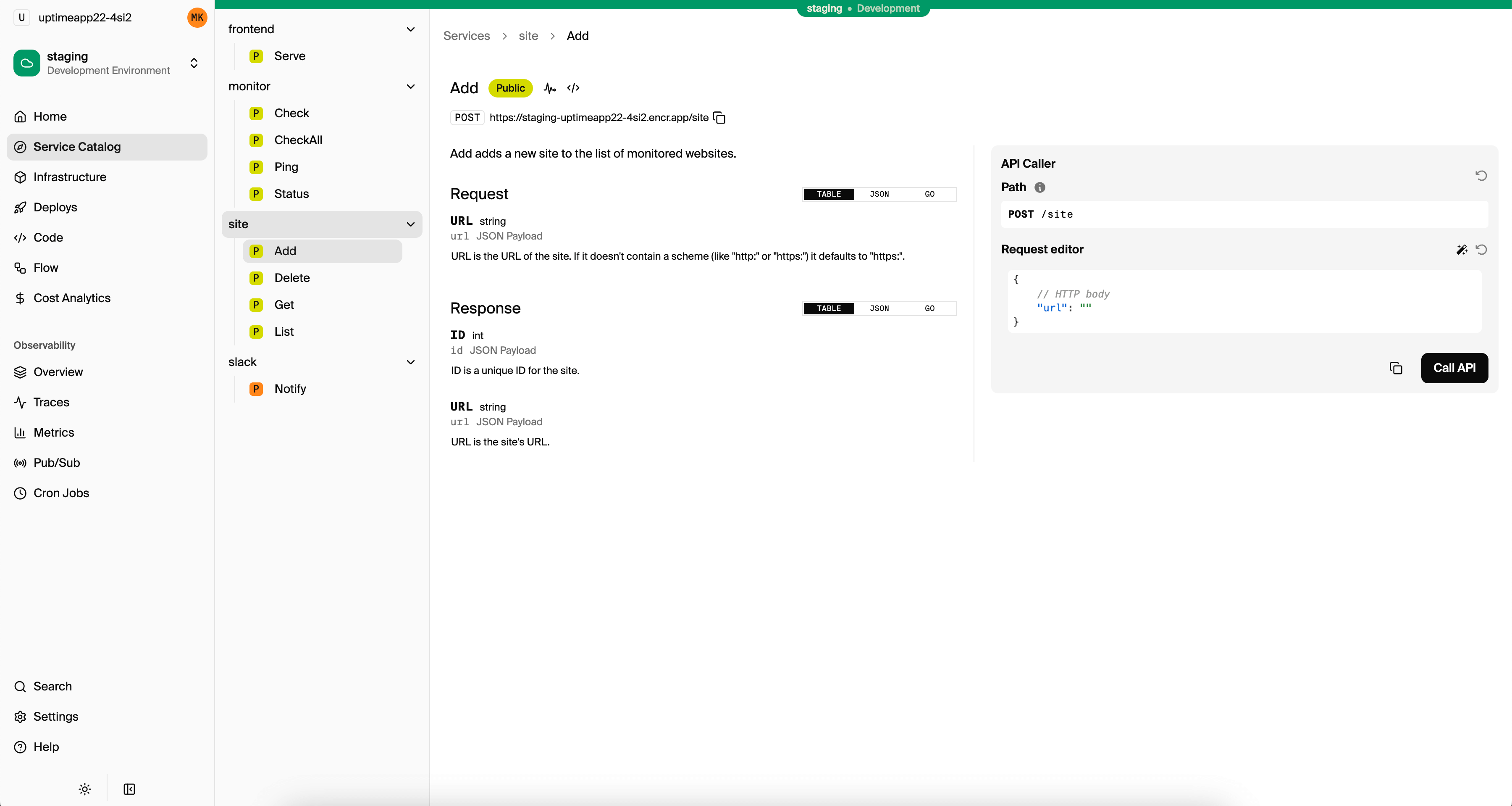
Verdict: Fastify is flexible for microservices but requires more infrastructure work. Encore makes microservices feel like a monolith to develop, with type-safe calls and automatic service discovery.
AI Code Generation
TypeScript's backend ecosystem has more competing options at every layer than almost any other language, and AI agents will use a different combination of framework plugins, validation, and database access on every prompt. The problem isn't that there's no structure available, it's that there are too many valid structures to choose from.
Fastify
Fastify's plugin system gives it more structure than Express, but agents still face decisions at every layer: whether to use JSON Schema directly or TypeBox for validation, which database plugin to register (@fastify/postgres, @fastify/mysql, or a standalone ORM like Prisma), how to structure route plugins and encapsulation, which auth plugin to use (@fastify/jwt, @fastify/auth, or a custom decorator). The output works, but it's different each time, and the agent spends most of its effort on plugin registration and schema wiring rather than your business logic.
// An agent asked to "add an order creation endpoint" might generate:
// - JSON Schema validation or TypeBox schema with Static<typeof ...>
// - A @fastify/postgres plugin or a Prisma client or a Drizzle connection
// - Route-level schema or a shared schema registry
// - @fastify/jwt or @fastify/auth or a custom preHandler hook
// - Different plugin encapsulation patterns each time
Encore.ts
With Encore, the project's API patterns, infrastructure declarations, and service structure are already defined. The agent reads the existing conventions and writes code that follows them. A prompt to "add an order creation endpoint" produces an api() function with typed request/response interfaces and a database call using the existing SQLDatabase declaration, not a new architecture.
orders/orders.ts// The agent sees existing patterns and follows them:
export const create = api(
  { expose: true, auth: true, method: "POST", path: "/orders" },
  async (req: CreateOrderRequest): Promise<Order> => {
    // Business logic only — the agent doesn't reinvent the structure
    const order = await db.queryRow<Order>`
      INSERT INTO orders (customer_id, total)
      VALUES (${req.customerId}, ${req.total})
      RETURNING id, customer_id as "customerId", total
    `;
    return order!;
  }
);
Encore also provides an MCP server and editor rules (encore llm-rules init) that give agents access to database schemas, distributed traces, and service architecture. This means agents can generate queries that match your actual tables, debug with real request data, and verify their own work. Read more in How AI Agents Want to Write TypeScript.
Verdict: Fastify's plugin system provides some structure, but the agent still has to decide on schema format, database plugin, and auth approach on every prompt. Encore gives agents a single set of conventions plus live system context through MCP, which produces consistent, deployable code.
How to Choose
Start at the top and follow the first question you can answer with a yes:
Do you want infrastructure provisioned from your code, without building a DevOps team internally?
 EncoreInfrastructure automation in your own AWS or GCP accountEncoreInfrastructure automation in your own AWS or GCP account
Are you building several services that share databases, Pub/Sub, or cron jobs?
EncoreType-safe service calls and built-in tracingEncoreType-safe service calls and built-in tracingDo you need high request throughput from a Node.js backend?
EncoreAbout 2x Fastify's throughput in our benchmarksEncoreAbout 2x Fastify's throughput in our benchmarksDo you need specific Fastify plugins, or fine-grained control over HTTP handling?
 FastifySchema-based validation and a mature plugin systemFastifySchema-based validation and a mature plugin systemEncoreNew backends: types as validation and built-in observability
Encore is open source with 12,000+ GitHub stars. It provisions infrastructure in your own AWS or GCP account, or you can build Docker images and deploy anywhere.
Getting Started
Try both with a small project:
- Fastify Getting Started
- Encore.ts Quickstart
- Encore AI Integration for using Encore with AI coding agents
You might also find our Express.js vs Encore.ts comparison helpful, or check out the Best TypeScript Backend Frameworks guide for a broader perspective.
Or install the CLI and create a starter app:
Run in your terminal to get started locally.
Have questions about choosing a framework? Join our Discord community where developers discuss architecture decisions daily.
Deploy to your cloud on AWS and Google Cloud
without managing infrastructure
Encore lets developers and agents define application infrastructure directly in code, then automatically provisions it from local development to production in your AWS or GCP account.
