
We started Encore five years ago because developers were spending too much time configuring infrastructure and jumping through hoops, not building products.
That problem persists. AI agents can now scaffold entire backends in minutes, but running them well - with proper observability, and reliable, secure, infrastructure across multiple environments - still requires significant work.
Today, we're launching Encore Cloud 2.0, a big upgrade to our development platform that understands your code and automates the operations layer.
→ New to Encore? Keep reading to learn about the problem Encore solves.
→ Already using Encore? Skip to What's New
The problem
Before we get into what's new, we'd like to take a moment to expand on why we set out building Encore. I mean, what exactly is wrong with existing tools like Terraform?
These days, AI is already helpful in writing Terraform. But its potential usefulness is limited, because it lacks context.
For most teams, the "truth" of a system is scattered. Business logic lives in one place, infrastructure definitions in another, permissions somewhere else, plus there's those pesky yet inevitable manual changes in cloud consoles. There's no single authoritative model of how the system runs.
Without such a model, common questions require significant human effort to get right:
- Which services actually need to talk?
- What permissions are truly required?
- How can we be sure this infra change won't break something?
Fragmentation turns operating your system into a game of "spot the difference" between your intent and your infrastructure.
Framework-defined infrastructure
We designed Encore to solve this by ensuring that the application code is the single source of truth for everything that impacts application behavior, so that we can derive a complete system model from it.
It works by providing an open source backend framework for TypeScript and Go, which comes with packages to define services and APIs, and infrastructure like databases, message queues, and scheduled jobs.
Unlike Terraform, you do not define specific cloud resources, configurations, or providers in code. You only express what is relevant to the application behavior.
In Encore.ts, creating a database object is new SQLDatabase("users"). An API endpoint is a function with the api() decorator. This is enough for Encore to understand what you're building, identify which services need which permissions, and generate everything needed to run it.
From your code, Encore Cloud automatically orchestrates:
- Cloud Resources: Databases, caches, and queues
- IAM Policies: Least-privilege permissions, generated automatically
- Networking: Service discovery and secure connectivity
- Observability: Tracing and metrics, wired out of the box
- Documentation: Service catalog, API docs, and architecture diagrams
Because infrastructure details are not embedded in your code, the same application can run on different environments without modification. You create an environment with Encore Cloud and choose where it runs, on AWS or Google Cloud, and using what type of infrastructure, Kubernetes or serverless platforms.
Everything deploys to your own AWS or Google Cloud account by integrating directly with their APIs. Encore provisions resources with sane defaults, which you can tune in Encore Cloud or directly in your cloud provider without them being overridden.
With this approach, there's an intentional tradeoff; you partially give up having low-level control over individual cloud resources defined in code, in exchange for productivity, portability, and safety at the system level.
For teams that want to hand-tune every single resource, Terraform is likely the right tool. For teams that want to focus on application behavior and evolve infrastructure over time without rewrites, Encore optimizes for that path while providing easy-to-reach knobs and configuration options for key things.
Because your code is the source of truth, drift is effectively eliminated. If infrastructure is missing, Encore provisions it. If a resource is removed from your code, Encore marks it as "unused" so you can safely delete it when you're ready.
— But, what about lock-in? We're engineers ourselves and get why this matters, so we've designed Encore to reduce lock-in from the start. Learn more about migrating away
What's new in 2.0
Now let's get to the exciting bit, what's new.
Encore Cloud 2.0 builds on the foundation we've created over the past five years, and delivers an upgraded platform that feels less like "managing servers" and more like shipping product.
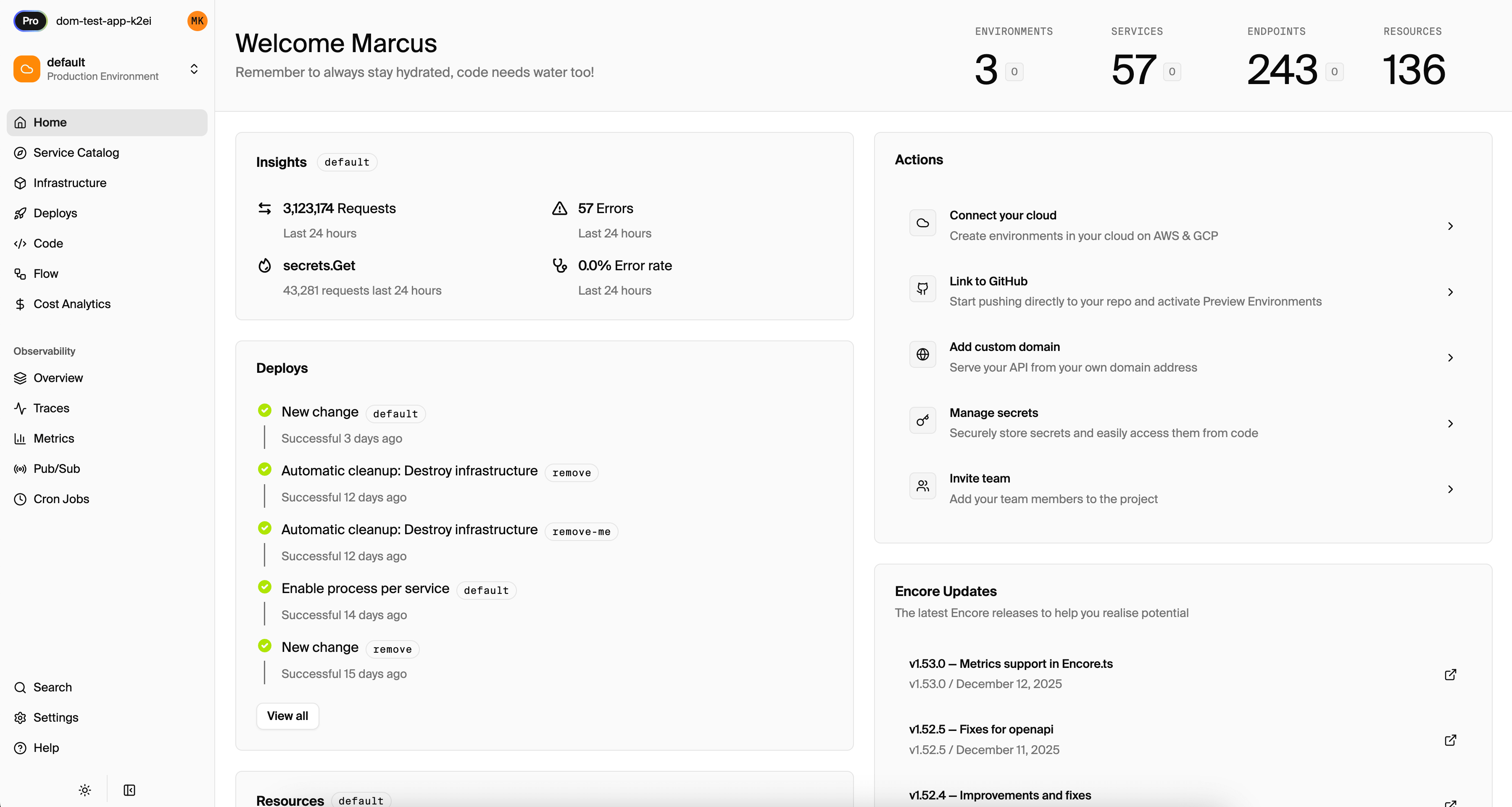
1. A redesigned operations dashboard
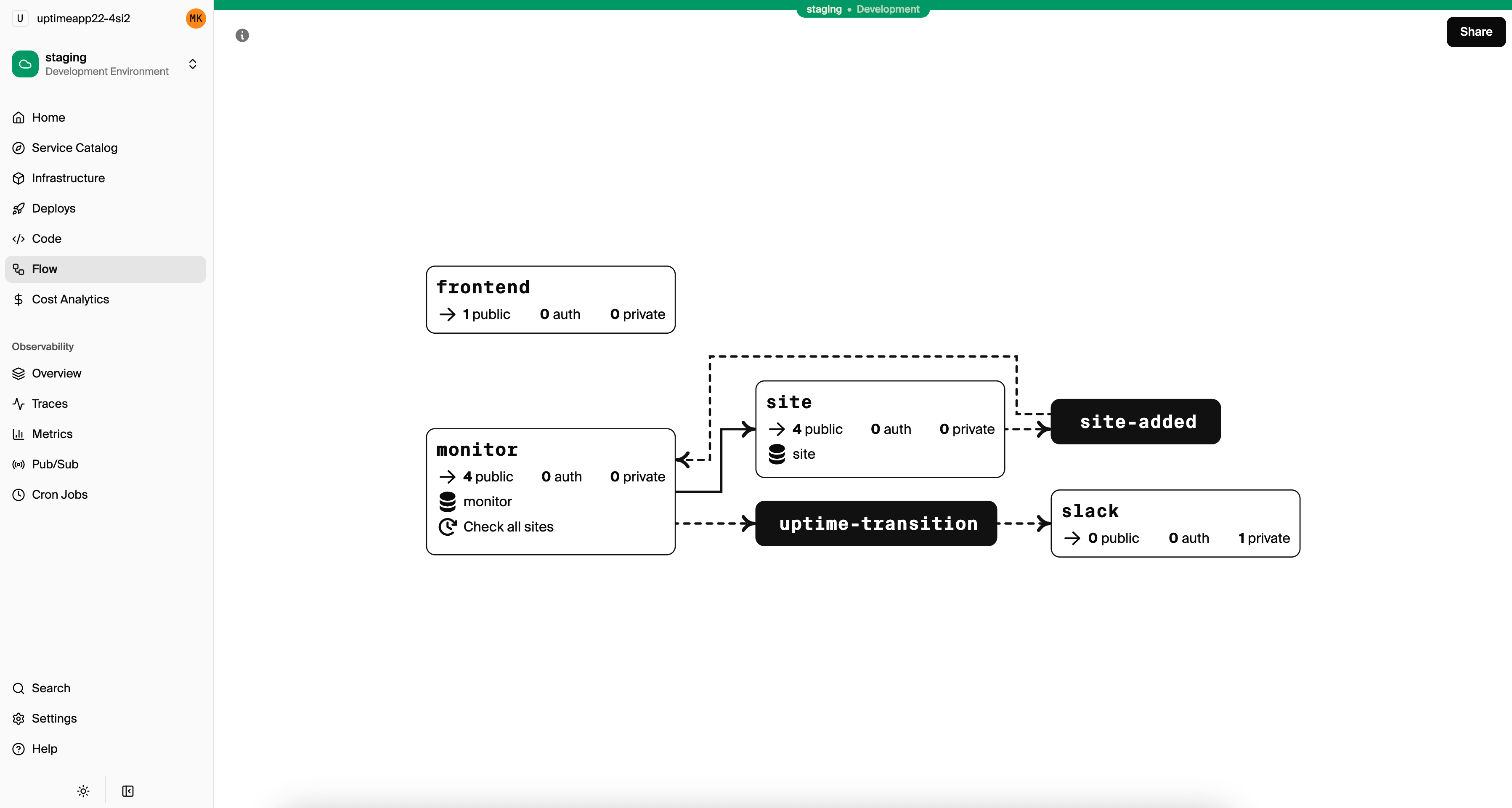
We've rebuilt the dashboard to reflect how engineers actually think about systems. It allows you to navigate large distributed applications across multiple environments, surfacing topology, deployments, and infrastructure state without the noise.
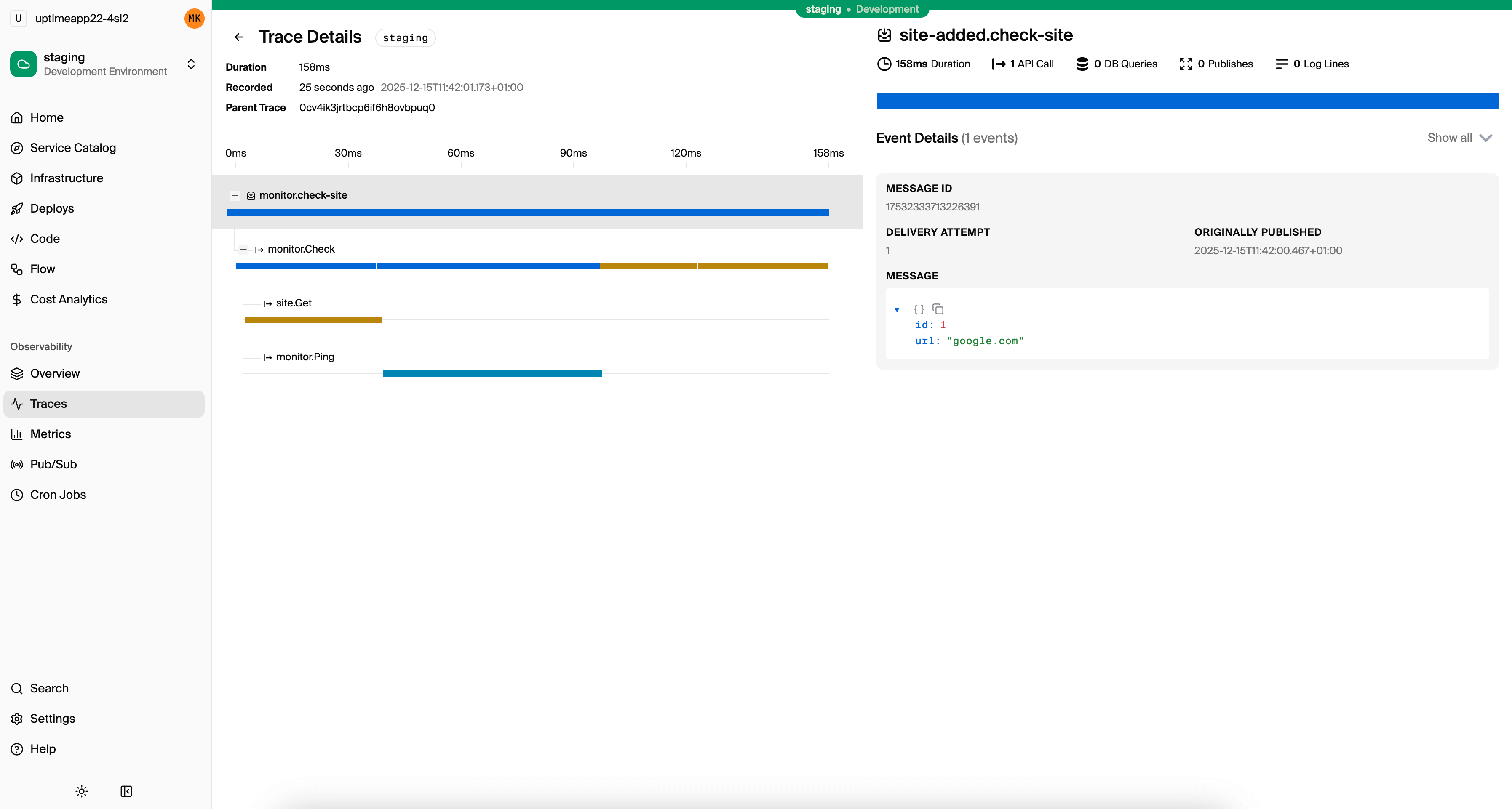
2. Full-stack observability
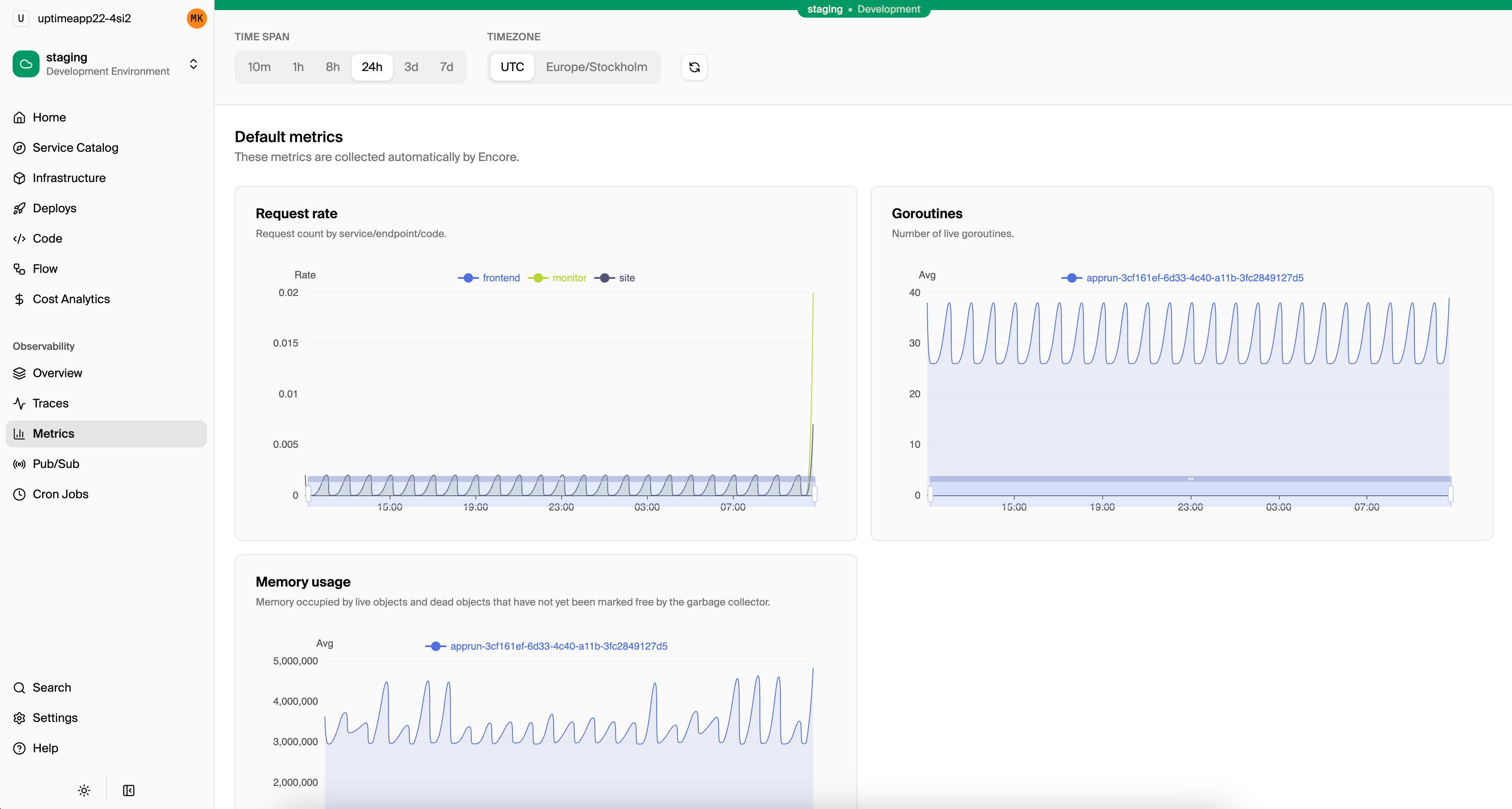
For teams using Encore.ts, metrics now live alongside traces and logs. You get a complete, correlated view of system behavior across services. No external agents to install, no dashboards to configure manually.
For teams using Encore.go where metrics was already available, you get an upgraded dashboard with more performant and usable graphs.
3. System transparency
Because Encore understands your system model, it maintains the artifacts that usually go stale. In this release we've improved the performance and usability of these tools:
- Architecture Diagrams: Always up-to-date, generated from the live graph.
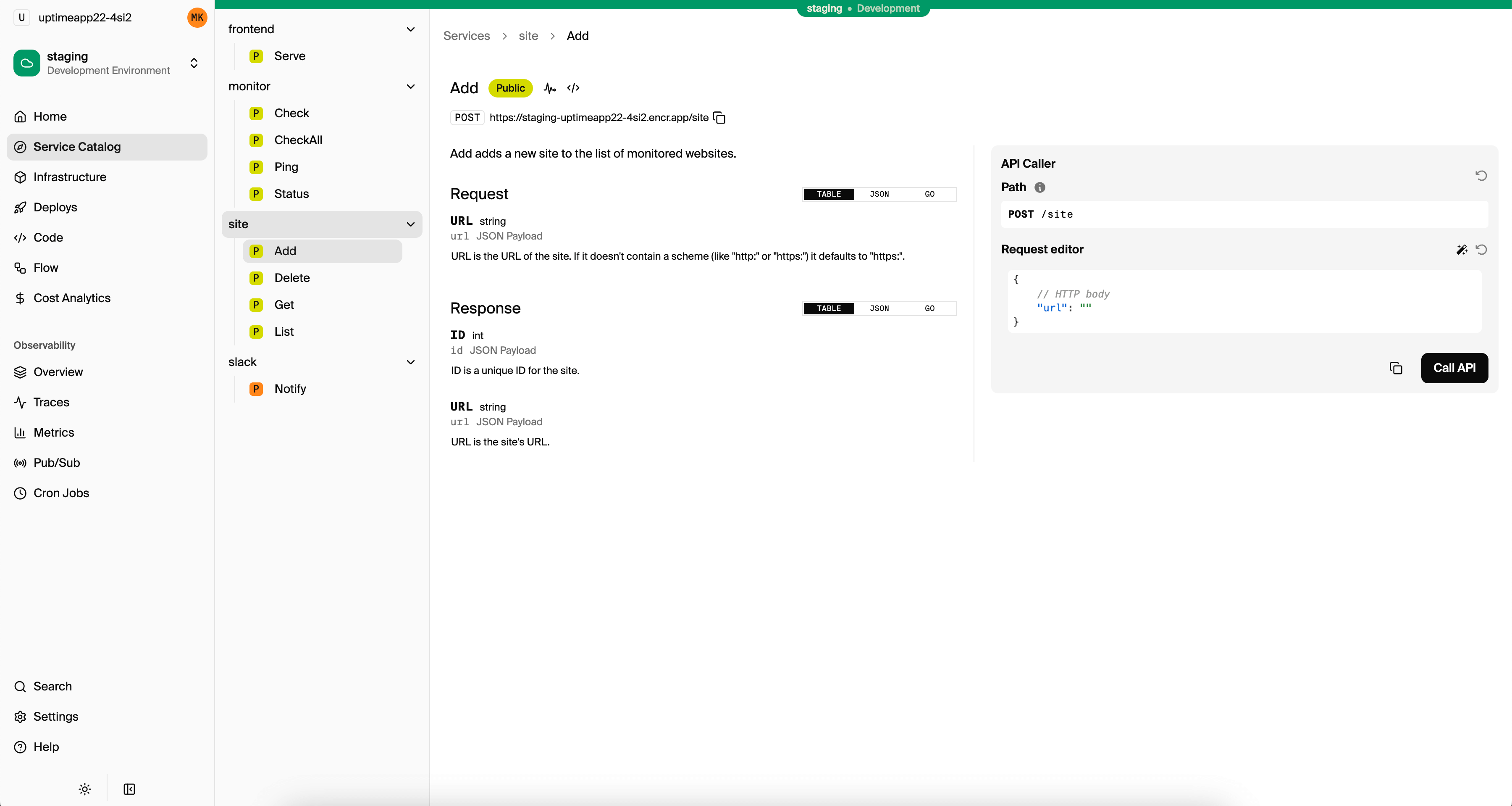
- Service Catalog: A real-time inventory of what's running.
- Local MCP Server: Allowing AI agents to inspect your system, and take actions like call endpoints, view traces, and more.
4. Zero-friction onboarding
We've streamlined the path from "new repo" to "production URL." With tighter GitHub integration, you can go from code to a fully provisioned cloud environment in minutes.
Jump in
Encore Cloud 2.0 is available now.
Install the CLI and create an app.
Or book a demo to see how it works with a production system.
For teams already using Encore, the 2.0 dashboard features are rolling out automatically. Update to the latest CLI version using encore version update to start using metrics in Encore.ts.
Recent articles

Introducing Encore × SurrealDB
Combine vector search and graph relationships with a backend agents can build and verify end-to-end.
 Ivan Cernja
Introducing Encore × Bird
Build messaging workflows and test backend changes end-to-end locally.
Ivan Cernja
Encore for Rust
An early look at Encore for Rust, entering beta soon.
Ivan Cernja