Hono vs Encore.ts in 2026
Comparing edge-first and infrastructure-aware TypeScript frameworks

Hono is an ultralight framework that runs on edge runtimes like Cloudflare Workers, Deno, and Bun. Encore.ts takes a different approach, focusing on distributed systems with automatic infrastructure provisioning, type-safe service communication, and built-in observability.
Both frameworks are TypeScript-first. The choice depends on whether you're targeting edge deployments or building production backend systems with databases, services, and observability needs.
Quick Comparison
The Basics: Defining an API
Let's start with a simple REST endpoint.
Hono
import { Hono } from 'hono';

const app = new Hono();

app.get('/hello/:name', (c) => {
  const name = c.req.param('name');
  return c.json({ message: `Hello, ${name}!` });
});

export default app;
Hono's API is clean and familiar if you've used Express or similar frameworks. The context object (c) provides access to request data and response methods. The same code runs on Cloudflare Workers, Deno Deploy, or Node.js.
Encore.ts
hello/hello.tsimport { api } from "encore.dev/api";

interface HelloResponse {
  message: string;
}

export const hello = api(
  { method: "GET", path: "/hello/:name", expose: true },
  async ({ name }: { name: string }): Promise<HelloResponse> => {
    return { message: `Hello, ${name}!` };
  }
);
Encore uses a declarative approach with explicit types for request and response. The framework handles server setup, routing, and validation.
Verdict: Both are straightforward for simple endpoints. Encore provides more structure with explicit typing and automatic validation.
Type Safety and Validation
Hono
Hono integrates with Zod for validation:
import { Hono } from 'hono';
import { zValidator } from '@hono/zod-validator';
import { z } from 'zod';

const app = new Hono();

const createUserSchema = z.object({
  email: z.string().email(),
  name: z.string().min(1),
});

app.post(
  '/users',
  zValidator('json', createUserSchema),
  async (c) => {
    const { email, name } = c.req.valid('json');
    return c.json({ id: 1, email, name });
  }
);
Hono also supports typed routes with the hc client:
import { Hono } from 'hono';
import { hc } from 'hono/client';

const app = new Hono()
  .get('/users/:id', (c) => {
    return c.json({ id: c.req.param('id'), name: 'John' });
  });

type AppType = typeof app;

// Type-safe client
const client = hc<AppType>('http://localhost:3000');
const res = await client.users[':id'].$get({ param: { id: '1' } });
Encore.ts
users/users.tsimport { api } from "encore.dev/api";

interface CreateUserRequest {
  email: string;
  name: string;
}

interface User {
  id: number;
  email: string;
  name: string;
}

export const createUser = api(
  { method: "POST", path: "/users", expose: true },
  async (req: CreateUserRequest): Promise<User> => {
    return { id: 1, email: req.email, name: req.name };
  }
);
Encore validates requests based on TypeScript types. For additional constraints:
service.tsimport { MinLen, IsEmail } from "encore.dev/validate";

interface CreateUserRequest {
  email: string & IsEmail;
  name: string & MinLen<1>;
}
Service-to-service calls are also type-safe:
service.tsimport { users } from "~encore/clients";

// TypeScript error if types don't match
const user = await users.createUser({ email: "test@example.com", name: "John" });
Verdict: Encore uses native TypeScript types without requiring Zod. Encore also generates type-safe service clients automatically for microservices communication.
Runtime and Deployment
Hono
Hono's biggest strength is universal runtime support:
// Cloudflare Workers
export default app;

// Deno
Deno.serve(app.fetch);

// Bun
export default { fetch: app.fetch };

// Node.js
import { serve } from '@hono/node-server';
serve(app);
The same code runs at the edge (Cloudflare Workers, Deno Deploy), on serverless platforms (AWS Lambda, Vercel), or traditional servers.
Encore.ts
Encore targets Node.js with a Rust-based runtime:
# Local development
encore run

# Deploy to your AWS or GCP account
git push encore
The Encore platform provisions infrastructure in your own cloud account (AWS or GCP). You can also self-host with Docker for deployment to any platform.
Verdict: Hono supports edge runtimes. Encore is focused on production backend systems with databases and services, deployed to your AWS or GCP account. For most backend use cases, Encore provides more complete infrastructure.
Infrastructure and Databases
This is where the frameworks diverge significantly.
Hono
Hono doesn't include infrastructure primitives. For databases, you bring your own:
import { Hono } from 'hono';
import { Pool } from 'pg';

const pool = new Pool({ connectionString: process.env.DATABASE_URL });

const app = new Hono();

app.get('/users/:id', async (c) => {
  const id = c.req.param('id');
  const result = await pool.query(
    'SELECT * FROM users WHERE id = $1',
    [id]
  );
  return c.json(result.rows[0]);
});
For edge deployments, you'd use edge-compatible databases like Cloudflare D1, Turso, or PlanetScale:
import { Hono } from 'hono';

const app = new Hono<{ Bindings: { DB: D1Database } }>();

app.get('/users/:id', async (c) => {
  const id = c.req.param('id');
  const user = await c.env.DB
    .prepare('SELECT * FROM users WHERE id = ?')
    .bind(id)
    .first();
  return c.json(user);
});
Encore.ts
Encore provides infrastructure primitives:
users/users.tsimport { api } from "encore.dev/api";
import { SQLDatabase } from "encore.dev/storage/sqldb";

const db = new SQLDatabase("users", { migrations: "./migrations" });

export const getUser = api(
  { method: "GET", path: "/users/:id", expose: true },
  async ({ id }: { id: string }) => {
    return await db.queryRow`SELECT * FROM users WHERE id = ${id}`;
  }
);
Running encore run provisions a local PostgreSQL database automatically. Deploying provisions RDS or Cloud SQL in your cloud account.
Encore also includes Pub/Sub, cron jobs, and object storage:
import { Topic, Subscription } from "encore.dev/pubsub";
import { CronJob } from "encore.dev/cron";
import { Bucket } from "encore.dev/storage/objects";

const userCreated = new Topic<{ userId: string }>("user-created", {
  deliveryGuarantee: "at-least-once",
});

const _ = new CronJob("cleanup", {
  title: "Daily cleanup",
  every: "24h",
  endpoint: cleanupEndpoint,
});

const uploads = new Bucket("uploads", { versioned: false });
Verdict: Hono is database-agnostic and works with edge databases. Encore provides integrated PostgreSQL with automatic provisioning plus additional infrastructure primitives. Choose Hono for edge-first architectures; choose Encore for traditional backend systems with databases.
Local Development
Hono
Local development uses standard Node.js tooling:
# Install dependencies
npm install

# Start development server
npm run dev
For databases, you set up your own:
# Start PostgreSQL with Docker
docker run -d -p 5432:5432 -e POSTGRES_PASSWORD=secret postgres

# Set environment variable
export DATABASE_URL=postgres://postgres:secret@localhost:5432/myapp

# Run your app
npm run dev
Encore.ts
encore run
Encore provisions local databases, runs migrations, and starts all services. The local development dashboard at localhost:9400 provides API testing and distributed tracing.
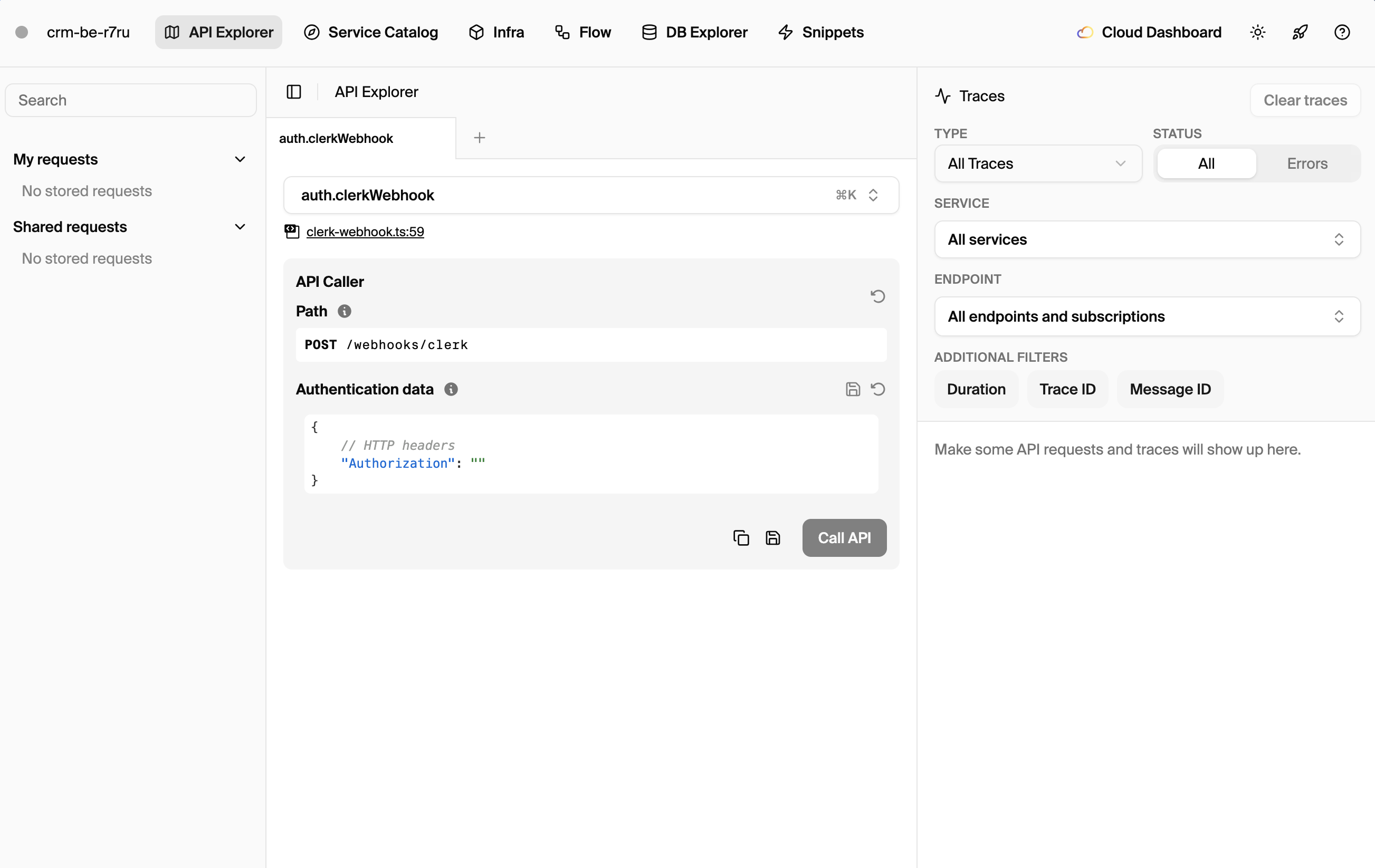
Verdict: Hono uses familiar tooling; Encore automates infrastructure setup. For projects with databases and multiple services, Encore saves significant setup time.
Middleware
Hono
Hono has a clean middleware system:
import { Hono } from 'hono';
import { logger } from 'hono/logger';
import { cors } from 'hono/cors';
import { jwt } from 'hono/jwt';

const app = new Hono();

// Built-in middleware
app.use('*', logger());
app.use('*', cors());

// JWT authentication
app.use('/api/*', jwt({ secret: process.env.JWT_SECRET }));

// Custom middleware
app.use('*', async (c, next) => {
  const start = Date.now();
  await next();
  console.log(`${c.req.method} ${c.req.url} - ${Date.now() - start}ms`);
});

app.get('/api/profile', (c) => {
  const payload = c.get('jwtPayload');
  return c.json({ userId: payload.sub });
});
Hono includes middleware for common needs: CORS, compression, caching, rate limiting, and authentication.
Encore.ts
Encore supports middleware and a specialized auth handler:
profile/profile.tsimport { api, Gateway, middleware } from "encore.dev/api";
import { authHandler } from "encore.dev/auth";

// General middleware
const loggingMiddleware = middleware({}, async (req, next) => {
  const start = Date.now();
  const resp = await next(req);
  console.log(`Request took ${Date.now() - start}ms`);
  return resp;
});

// Auth handler
const auth = authHandler(async (params) => {
  const token = params.authorization.replace("Bearer ", "");
  const userId = await validateToken(token);
  return { userId };
});

export const gateway = new Gateway({ authHandler: auth });

// Protected endpoint
export const getProfile = api(
  { method: "GET", path: "/profile", auth: true, expose: true },
  async () => {
    const { userId } = getAuthData()!;
    return { userId };
  }
);
Verdict: Both have middleware systems. Encore provides structured authentication with type-safe auth data propagation across services.
Observability
Hono
Hono relies on external tooling for observability:
import { Hono } from 'hono';
import { logger } from 'hono/logger';

const app = new Hono();

// Basic request logging
app.use('*', logger());

// For tracing, integrate OpenTelemetry or platform-specific tools
// Cloudflare Workers have built-in analytics
// Other platforms require manual setup
Edge platforms like Cloudflare provide their own analytics. For comprehensive observability, you integrate external services.
Encore.ts
users/users.tsimport { api } from "encore.dev/api";
import log from "encore.dev/log";

export const getUser = api(
  { method: "GET", path: "/users/:id", expose: true },
  async ({ id }: { id: string }) => {
    log.info("fetching user", { userId: id });
    // All database queries and service calls are traced automatically
    return { id, name: "John" };
  }
);
Every request is traced end-to-end. Database queries and service calls appear in traces automatically.
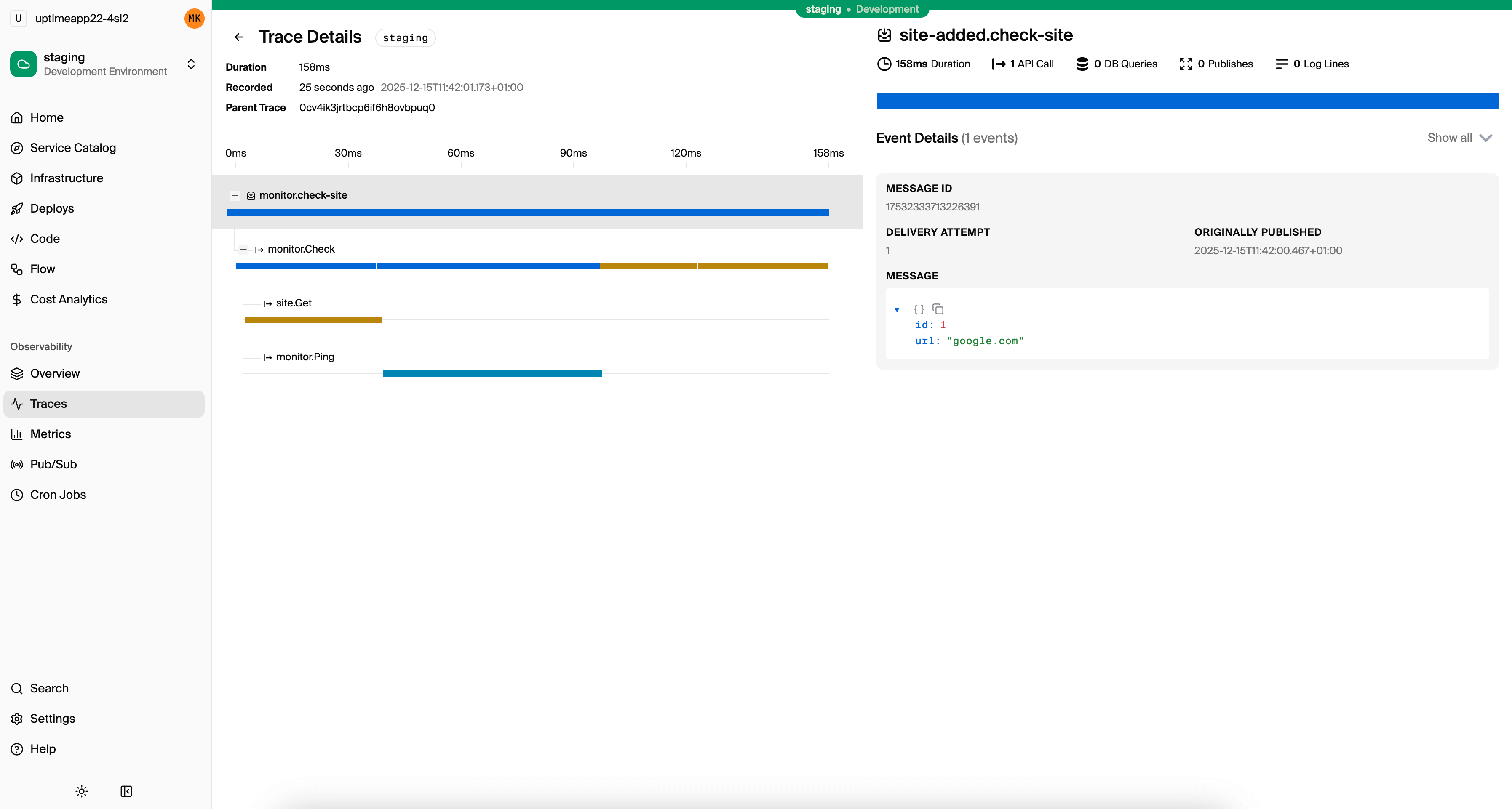
Verdict: Encore provides built-in observability. Hono relies on platform tools or external services. For comprehensive tracing without setup, Encore wins.
Microservices
Hono
Hono doesn't have built-in service communication. You handle it manually:
// users-service
const app = new Hono();
app.get('/users/:id', (c) => c.json({ id: c.req.param('id'), name: 'John' }));
export default app;

// orders-service
const app = new Hono();
app.post('/orders', async (c) => {
  const { userId } = await c.req.json();
  const response = await fetch(`${USERS_SERVICE_URL}/users/${userId}`);
  const user = await response.json();
  return c.json({ orderId: 1, user });
});
You manage URLs, error handling, and retries yourself.
Encore.ts
users/users.ts// users/api.ts
export const getUser = api(
  { method: "GET", path: "/users/:id", expose: true },
  async ({ id }: { id: string }) => {
    return { id, name: "John" };
  }
);

// orders/api.ts
import { users } from "~encore/clients";

export const createOrder = api(
  { method: "POST", path: "/orders", expose: true },
  async (req: CreateOrderRequest) => {
    const user = await users.getUser({ id: req.userId });
    return { orderId: 1, user };
  }
);
Service calls are type-safe function calls with automatic service discovery.
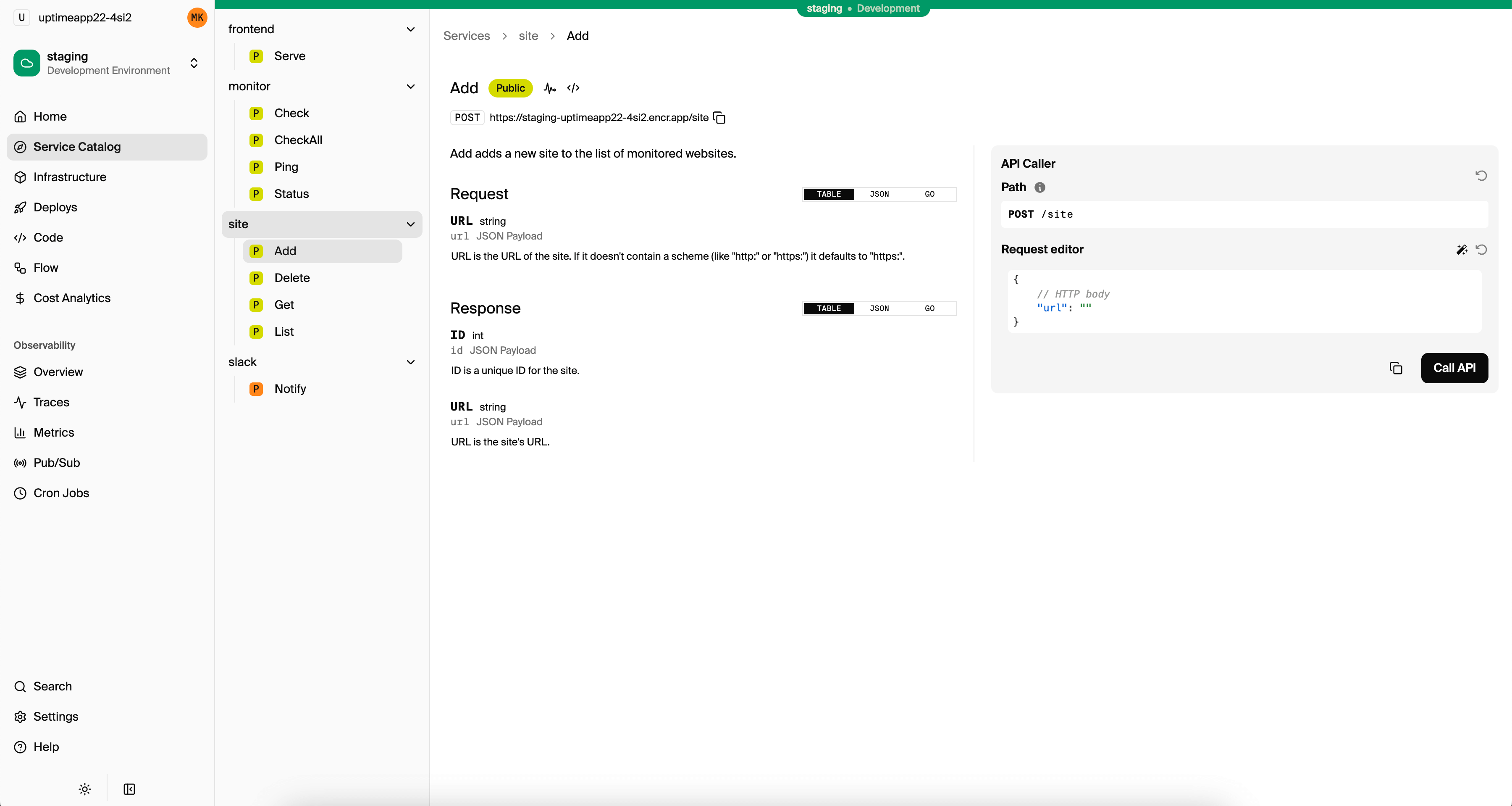
Verdict: Hono leaves service communication to you. Encore provides type-safe service calls with automatic discovery. For microservices, Encore significantly reduces complexity.
AI Code Generation
TypeScript's backend ecosystem has more competing options at every layer than almost any other language, and AI agents will use a different combination of runtime, validation, and database access on every prompt. The problem isn't that there's no structure available, it's that there are too many valid structures to choose from.
Hono
Hono makes the fragmentation problem worse by adding the multi-runtime dimension. An agent has to decide not just on validation (Zod validator, Valibot, or manual c.req.json() parsing) and database access (pg Pool, Prisma, Drizzle, or a platform-specific binding like Cloudflare D1), but also which deployment target to write for (Node.js, Bun, Cloudflare Workers, Deno), which changes the available APIs, import patterns, and even which database libraries are compatible. The output works, but it's different each time.
// An agent asked to "add an order creation endpoint" might generate:
// - Zod validator middleware or Valibot or manual c.req.json() parsing
// - A pg Pool connection or Prisma client or D1 binding
// - Code targeting Node.js, or Bun, or Cloudflare Workers
// - A custom JWT middleware or hono/jwt or a platform-specific auth
// - Different project structure and import patterns each time
Encore.ts
With Encore, the project's API patterns, infrastructure declarations, and service structure are already defined. The agent reads the existing conventions and writes code that follows them. A prompt to "add an order creation endpoint" produces an api() function with typed request/response interfaces and a database call using the existing SQLDatabase declaration, not a new architecture.
orders/orders.ts// The agent sees existing patterns and follows them:
export const create = api(
  { expose: true, auth: true, method: "POST", path: "/orders" },
  async (req: CreateOrderRequest): Promise<Order> => {
    // Business logic only — the agent doesn't reinvent the structure
    const order = await db.queryRow<Order>`
      INSERT INTO orders (customer_id, total)
      VALUES (${req.customerId}, ${req.total})
      RETURNING id, customer_id as "customerId", total
    `;
    return order!;
  }
);
Encore also provides an MCP server and editor rules (encore llm-rules init) that give agents access to database schemas, distributed traces, and service architecture. This means agents can generate queries that match your actual tables, debug with real request data, and verify their own work. Read more in How AI Agents Want to Write TypeScript.
Verdict: Hono's multi-runtime flexibility means the agent has to make decisions about the deployment target on top of all the usual middleware and database choices. Encore gives agents a single set of conventions and a fixed runtime, plus live system context through MCP, which produces consistent, deployable code.
How to Choose
Start at the top and follow the first question you can answer with a yes:
Are you deploying to edge runtimes like Cloudflare Workers or Deno Deploy?
 HonoRuns the same code on any runtimeHonoRuns the same code on any runtime
Do you want infrastructure provisioned from your code, without building a DevOps team internally?
 EncoreInfrastructure automation in your own AWS or GCP accountEncoreInfrastructure automation in your own AWS or GCP account
Are you building several services that share databases, Pub/Sub, or cron jobs?
EncoreType-safe service calls and built-in tracingEncoreType-safe service calls and built-in tracingAre you building serverless functions that don't need persistent infrastructure?
HonoLightweight, with minimal overheadHonoLightweight, with minimal overheadEncoreBackend systems with databases and servicesGetting Started
Try both with a small project:
- Hono Getting Started
- Encore.ts Quickstart
- Encore AI Integration for using Encore with AI coding agents
See also: Best TypeScript Backend Frameworks for a broader perspective on the TypeScript backend landscape.
Or install the CLI and create a starter app:
Run in your terminal to get started locally.
Have questions about choosing a framework? Join our Discord community where developers discuss architecture decisions daily.
Deploy to your cloud on AWS and Google Cloud
without managing infrastructure
Encore lets developers and agents define application infrastructure directly in code, then automatically provisions it from local development to production in your AWS or GCP account.
